By Marcus Reid | Last updated: June 15, 2026
The CBD market is large, largely unregulated in most countries, and full of products that range from excellent to essentially worthless. Because the FDA and equivalent agencies in most markets do not require pre-market approval for CBD supplements, the difference between a well-made product and a poorly made one comes down to what the manufacturer chooses to do, not what they are required to do.
This guide gives you five concrete things to check before buying any CBD product, so you can make that assessment yourself rather than relying on a brand’s marketing.
1. Always Check the Certificate of Analysis (COA)
A Certificate of Analysis is a lab report from an independent, third-party testing facility that shows exactly what is in a product. It is the single most important document when evaluating a CBD product, and if a company does not provide one, that alone is a reason to look elsewhere.
A complete COA should show:
- Cannabinoid profile: The actual CBD content in milligrams, confirmed by the lab. This should match what is on the label. If the label says 25mg per gummy and the COA shows 15mg, the product is mislabeled.
- THC content: Confirmed to be within legal limits (under 0.3% in the US, under 0.2% in the EU and UK). For broad-spectrum products, it should show non-detectable (ND) or below the limit of quantification (BLQ).
- Pesticide screen: Confirms no agricultural pesticides above safe thresholds.
- Heavy metals screen: Hemp is a bioaccumulator, meaning it absorbs heavy metals from soil. Products made from contaminated hemp can contain unsafe levels of lead, arsenic, cadmium, or mercury.
- Solvent residues: Checks for residual extraction solvents that should not be present in the final product.
- Microbial testing: Some COAs also include mold and bacteria testing, which is a positive sign.
The COA should be from a lab that is not affiliated with the brand. Look for labs accredited by ISO/IEC 17025, which is the international standard for testing laboratory competence. Many brands publish COAs on their website accessible by batch number or QR code on the packaging.
2. Know What CBD Content Actually Means
Many CBD products are marketed vaguely to obscure how little CBD they actually contain. Here is how to cut through that.
“Hemp extract” is not the same as CBD. A product labeled “500mg of hemp extract” may contain very little actual CBD. Look specifically for the CBD milligrams (mg) per serving and per container. If the label does not specify, check the COA. If the company will not provide a COA with a cannabinoid breakdown, the product is not worth buying.
Calculate price per milligram of CBD. This is the most reliable way to compare value across brands. Divide the total price by the total CBD milligrams in the container. A 30ml tincture with 1,000mg of CBD at $60 works out to $0.06 per mg. A bottle with 300mg at $50 works out to $0.17 per mg. Same format, dramatically different value.
Understand typical potency ranges. For gummies, 10 to 25mg per piece is standard. For tinctures, 500mg to 3,000mg per 30ml bottle is a normal range. Products below these ranges are not necessarily bad, but the dose per serving will be lower, which affects cost-effectiveness.
3. Choose the Right Extract Type for Your Needs
Every CBD product uses one of three extract types: full-spectrum, broad-spectrum, or isolate. Knowing which one you are buying and why it matters is a basic quality check that gets overlooked more than it should.
Full-spectrum contains CBD plus other cannabinoids, terpenes, and trace THC. It is generally considered the most effective option due to the entourage effect, but it carries a small drug test risk with regular use.
Broad-spectrum removes THC while preserving other cannabinoids and terpenes. A practical choice if THC exposure is a concern, provided the COA confirms non-detectable THC.
Isolate is pure CBD with everything else removed. Offers the most precise dosing and is completely THC-free, but lacks the synergistic compounds that may enhance effectiveness.
The extract type should be clearly stated on the label and verified in the COA cannabinoid panel. If a product does not state which type it is, that is a transparency red flag.
4. Read the Ingredient List
The ingredient list tells you a lot about how seriously a brand approaches product quality. Look for:
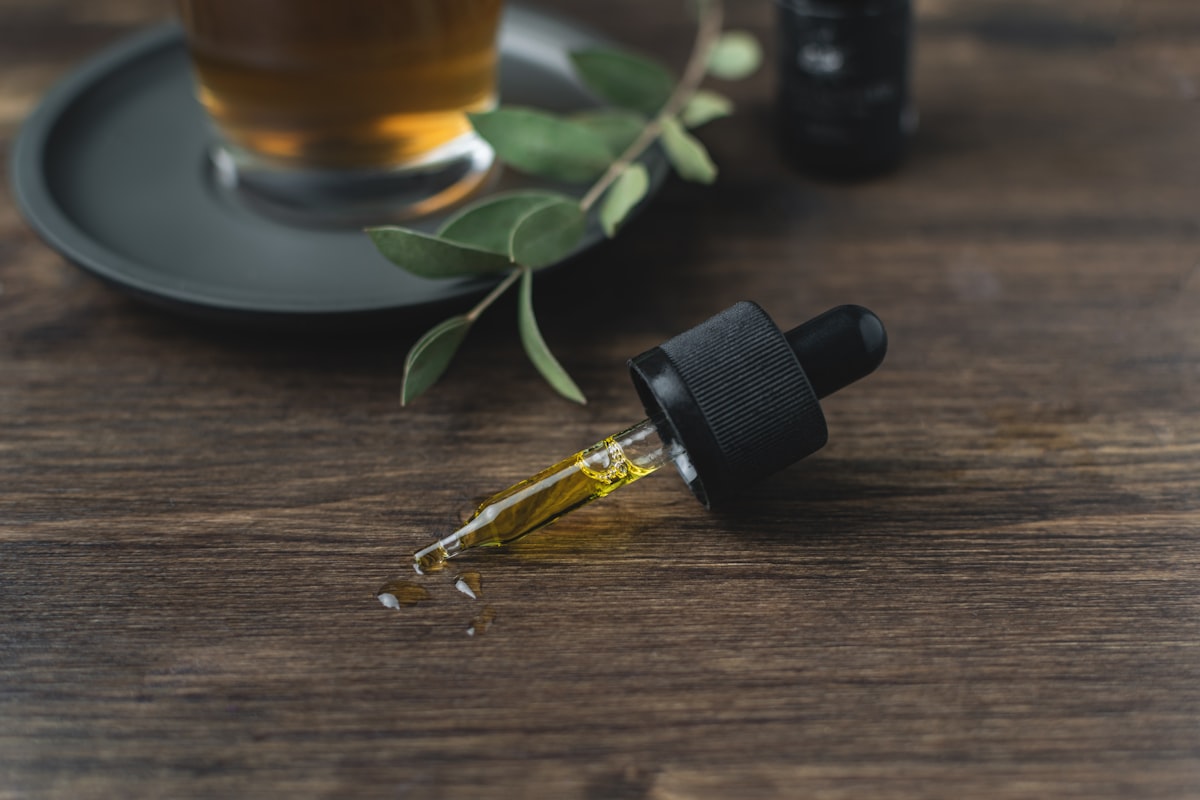
Clean carrier oils: For tinctures, MCT oil (derived from coconut), hemp seed oil, and olive oil are the most common carriers. MCT oil is the most bioavailable. Avoid products using cheap, unspecified “vegetable oil.”
Minimal additives: Gummies typically need a binder and flavoring, which is fine. Long lists of artificial colors, high-fructose corn syrup, and synthetic preservatives in a “wellness” product are worth noting.
Natural vs. artificial flavoring: This is a minor point, but natural flavoring is generally preferable to artificial. Some users are sensitive to certain artificial sweeteners, particularly erythritol or maltitol found in some “sugar-free” gummies, which can cause digestive upset.
USDA Organic certification: If a product carries the USDA Organic seal, it means the hemp was grown without synthetic pesticides or fertilizers, and the processing avoided certain chemicals. This is a positive but not a guarantee of overall product quality.
5. Evaluate Brand Transparency and Reputation
Quality CBD brands are not hard to identify once you know what to look for. They tend to share the following characteristics:
Clear hemp sourcing information: Where the hemp was grown, whether it is US-grown, European-grown, or from another region. US-grown hemp under USDA oversight is generally a positive sign. Unspecified or foreign-sourced hemp with no farm data is less reassuring.
Stated extraction method: CO2 extraction is the industry gold standard because it is solvent-free and produces a clean extract. Ethanol extraction is also acceptable when done properly. Avoid brands that do not specify or that use low-cost solvent extraction without documentation of residual testing.
Honest marketing language: Reputable brands avoid making medical claims. Phrases like “cures pain,” “treats anxiety,” or “prevents cancer” are illegal health claims in most markets and a sign that the company is either uninformed about regulations or willing to mislead customers. Look for language like “may support,” “has been studied for,” or “users report.”
Accessible customer support: A real company with a real product will have a way to answer questions, whether by email, phone, or live chat. Brands that are difficult to contact before you buy tend to stay that way after a problem arises.
Quick Reference Checklist
| What to Check | What Good Looks Like | Red Flag |
|---|---|---|
| COA availability | Publicly available, recent, from accredited lab | Not available or only on request |
| CBD content | Clearly stated in mg per serving and per container | Only says “hemp extract” with no CBD mg |
| THC content | Confirmed within legal limits on COA | No THC data provided |
| Extract type | Clearly labeled (full/broad/isolate) | Not stated |
| Contaminant testing | COA includes pesticides, heavy metals, solvents | COA only shows cannabinoids |
| Ingredients | Clean, minimal, recognizable | Long list of synthetic additives |
| Hemp source | US or EU-grown, stated on site | No sourcing information |
| Extraction method | CO2 or clean ethanol | Not stated |
| Marketing language | Careful, avoids medical claims | Claims to cure or treat diseases |
Frequently Asked Questions
How do I find a product’s Certificate of Analysis?
Most reputable brands publish COAs on their website, either on individual product pages or in a dedicated “Lab Results” section. Many products also include a QR code on the packaging that links directly to the COA for that specific batch. If you cannot find a COA after a reasonable search of the brand’s site, contact their customer support and ask for it directly. A good brand will provide it without hesitation.
Is a higher CBD dose always better?
Not necessarily. CBD dose response is not always linear, meaning more is not always better. Many users find an effective dose and experience diminishing returns beyond that point. Start with the manufacturer’s recommended dose and adjust gradually based on your own response rather than assuming the highest potency product is the right one.
Should I choose gummies or oil?
It depends on your priorities. Gummies are convenient, pre-dosed, and easy to incorporate into a routine, but take longer to work (30 to 90 minutes). Oil absorbed under the tongue works faster (15 to 45 minutes) and allows more flexible dosing. If consistency and convenience matter most, gummies are the better choice. If you want faster onset or precise dose control, oil is more practical.
Can I trust reviews on brand websites?
Brand-hosted reviews should be read with some skepticism, as most companies curate or moderate them. Third-party review platforms and independent CBD review sites tend to give a more complete picture. Look for patterns in both positive and negative reviews rather than individual data points, and pay attention to what users say about specific effects rather than general enthusiasm.
Related reading: The Complete CBD Guide | Full-Spectrum vs Broad-Spectrum vs Isolate | CBD Side Effects