By Marcus Reid | Last updated: October 4, 2026
If you are choosing your first CBD product, the format question comes up straight away: gummies, oil or capsules. They all contain CBD, but they fit different habits and different kinds of discomfort. This guide covers how each one is taken, what the human research actually says about absorption, which format suits pain, and where we would start.
What Are CBD Gummies, CBD Oil and CBD Capsules?
Gummies are chewable sweets with a fixed amount of CBD in each piece, commonly 10 mg, 25 mg or 30 mg. The hemp extract starts out as an oil and is mixed into a gelatin or pectin base with flavouring and sweetener. You chew, swallow and that is your dose.
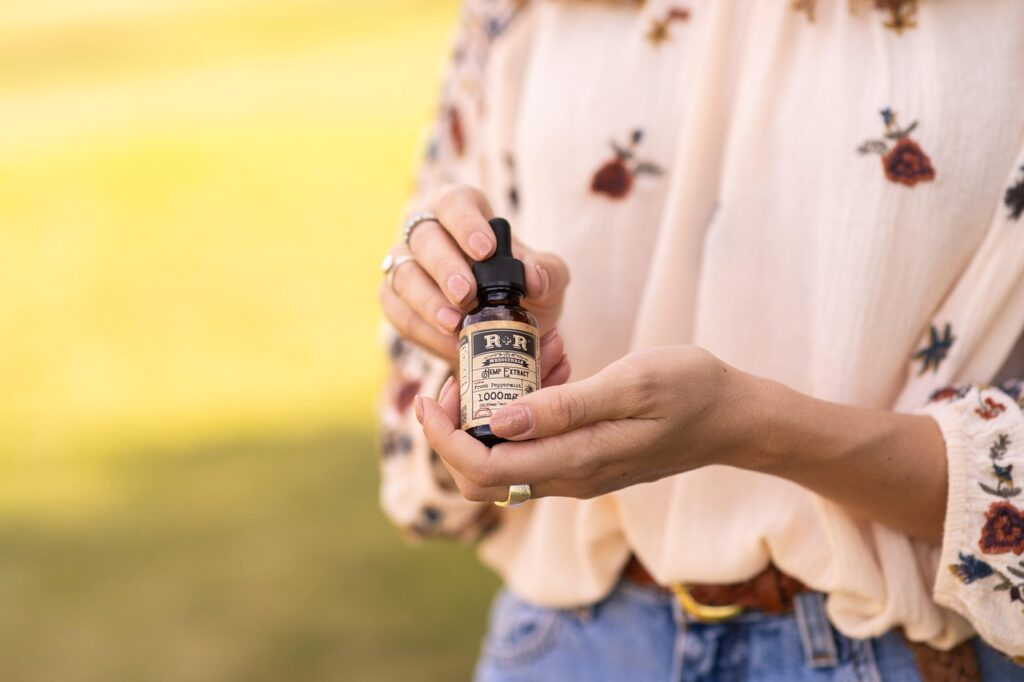
Oil, also called a tincture, is hemp extract dissolved in a carrier oil such as MCT or hemp seed oil. It comes with a dropper. You place the drops under your tongue, hold them for 60 to 90 seconds, then swallow. Some of the CBD is taken up through the lining of the mouth and the rest is swallowed.
Capsules and softgels hold a measured dose of extract in a shell. They behave like gummies in the body, but they are tasteless and contain no sugar, which matters if you are watching your intake. Our guide to CBD softgels and capsules covers that format in more detail.
Gummies vs Oil vs Capsules: Side by Side
| CBD Gummies | CBD Oil (under the tongue) | CBD Capsules | |
|---|---|---|---|
| How you take it | Chew and swallow | Drops held under the tongue | Swallow with water |
| Dosing | Fixed per gummy | Adjustable drop by drop | Fixed per capsule |
| Taste | Flavoured, sweet | Earthy hemp taste unless flavoured | None |
| Sugar | Usually yes | No | No |
| When people report feeling it | Often 30 minutes to 2 hours | Often 15 to 45 minutes | Often 30 minutes to 2 hours |
| Best fit | Daily routine, beginners, sleep | Flare-ups, fine-tuning a dose | Daily routine without sugar or taste |
| Travel | Easy, no liquid | Liquid bottle | Easy, no liquid |
The timing row is what users and brands commonly report, not a laboratory measurement, and it varies a lot from person to person. The section below explains why.
How Much CBD Actually Gets Into Your Body?
You will see confident percentages online claiming that a gummy delivers a fixed share of its CBD and an oil delivers roughly double. We looked for the human evidence behind those numbers and it is thinner than the internet suggests. A systematic review of every published human pharmacokinetic study on CBD found that, apart from smoking, no study had measured the absolute bioavailability of CBD taken by mouth or under the tongue. Peak blood levels after oral and under-the-tongue use were reached anywhere between 0 and 4 hours (Millar et al., Frontiers in Pharmacology, 2018).
What the same review did find, and what the official label of Epidiolex (the only FDA-approved CBD medicine) confirms, is that food changes absorption far more than format does. In healthy volunteers, taking CBD with a high-fat, high-calorie meal raised peak blood levels about 5-fold and total exposure about 4-fold compared with an empty stomach. Even a low-fat meal raised them roughly 4-fold and 3-fold (Epidiolex prescribing information, DailyMed).
The practical takeaway: take your gummy, capsule or oil at the same point in the day, ideally with a meal, and keep it that way. Switching between an empty stomach one day and dinner the next will change how much you feel more than switching formats. Our CBD bioavailability guide goes further into absorption across every format.
CBD Gummies vs CBD Oil for Pain
For pain, the right format depends on how your pain behaves rather than on which product is stronger.
Steady, everyday pain such as ongoing lower back pain, stiff joints or arthritis usually suits gummies or capsules. The goal is consistent daily use at the same times, and a fixed dose you can take without measuring is the format people actually keep up with. Consistency over several weeks matters more than speed here.
Pain that flares without warning, like a sudden back spasm or a bad day after exercise, is where oil earns its place. You can take a few drops when the flare starts and adjust the amount drop by drop, which a fixed gummy does not allow.
Both together is a common pattern among regular users: a gummy for daily coverage and an oil kept on hand for flare-ups. If you do this, count the milligrams from both products toward one daily total. For back pain specifically, our best CBD for back pain guide compares products by pain type.
Which Format Should a Beginner Choose?
For most first-time users, gummies are the easier start, for practical reasons:
- One gummy is one dose. There is nothing to measure, so it is easy to stay consistent while you work out what suits you.
- No hemp taste. Raw extract tastes earthy and some people stop taking oil for that reason alone.
- Easy to carry. A gummy looks like any other supplement.
Oil makes more sense if you want to adjust your dose in small steps, if you are cost-conscious (oil is often cheaper per milligram), or if your discomfort comes and goes. Capsules make more sense if you like the convenience of gummies but want no sugar, which is worth knowing if you are managing your blood sugar (see CBD and diabetes).
Which Format Works Best for Each Goal?
| Goal | Better format | Why |
|---|---|---|
| First time trying CBD | Gummies | Fixed dose removes the guesswork |
| Sleep | Gummies or capsules, with dinner or 1 to 2 hours before bed | Fits an evening routine; take it the same way every night |
| Everyday pain | Gummies or capsules | Easy to keep a consistent daily schedule |
| Pain or anxiety that flares | Oil | Take it when needed and adjust drop by drop |
| No sugar | Capsules or oil | Gummies usually contain sugar |
| Lowest cost per milligram | Oil | Usually cheaper per mg of CBD |
Is It the Same CBD Inside?
Yes. Gummies, oils and capsules can all be full-spectrum, broad-spectrum or isolate. The spectrum decides whether the product contains other hemp compounds, including trace THC in full-spectrum products, and it has nothing to do with the format. If you are drug tested, the spectrum is what matters, not whether you chose a gummy or an oil: see does CBD show up on a drug test. Federal hemp rules also change on 11 December 2026, when the limit becomes 0.4 mg of total THC per package, which affects full-spectrum products in every format (will full-spectrum CBD be banned?). For the differences between spectrum types, read full spectrum vs broad spectrum CBD.
Our Picks: Where We Would Start
If you want oil: CBD Pure Hemp Oil
Rating: 4.5/5 | Format: full-spectrum oil | Ships to: US
CBD Pure Hemp Oil is a full-spectrum oil made without harsh chemical solvents and sold in several strengths, so you can set your dose drop by drop. Its certificate of analysis is posted publicly and covers cannabinoids, THC, solvents, pesticides and heavy metals, and the 90-day money-back guarantee gives you time to see how it fits your routine. Because it is full-spectrum it contains trace THC, so skip it if you are drug tested. Full review: CBD Pure Hemp Oil Review 2026.
If you want gummies: Triple Green Farms
Rating: 4.6/5 | Format: full-spectrum gummies | Ships to: US
For a daily routine, Triple Green Farms is the gummy we would start with in the US. It is a full-spectrum formula made in an FDA-registered, GMP-certified facility, priced at $39.80 per bottle on the five-bottle bundle (retail is $79.50) with free shipping and a 30-day money-back guarantee. The CBD per gummy is not prominently listed, so start with one gummy and increase gradually. It also contains trace THC, so it is not the right choice if you are drug tested. Full review: Triple Green Farms CBD Gummies Review.
Check Triple Green Farms CBD Gummies
Comparing more options? See our best CBD gummies and best CBD oils roundups. Buying from Canada? Our best CBD for Canada guide covers what ships there.
Frequently Asked Questions
Are CBD gummies better than CBD oil?
Neither is better across the board. Gummies are easier for a steady daily routine because each one is a fixed dose with no hemp taste. Oil is better if you want to adjust your dose drop by drop or take CBD when discomfort flares. Most beginners find gummies easier to stick with.
Do CBD gummies contain oil?
Yes, in a sense. The hemp extract starts out as an oil and is mixed into the gummy base during manufacturing. What you receive is a solid chewable sweet, but the CBD inside began as an oil extract.
Are CBD gummies as strong as CBD oil?
Strength depends on the milligrams you take, not the format. Claims that oil delivers a fixed multiple of what a gummy delivers are not backed by direct human measurements. What clearly changes absorption is food: in the Epidiolex label, taking CBD with a high-fat meal raised peak blood levels about 5-fold compared with an empty stomach.
How long do CBD gummies take to work?
People commonly report feeling gummies somewhere between 30 minutes and 2 hours, and human studies show peak blood levels within about 4 hours of an oral dose. A meal changes both timing and how much is absorbed, so take them the same way each day.
Which works faster for pain, gummies or oil?
Oil held under the tongue is the usual choice when pain flares, because you can take it the moment discomfort starts and adjust the amount. For steady everyday pain, gummies or capsules are easier to take consistently, and consistency over weeks matters more than speed.
Are CBD gummies good for back pain?
They suit ongoing, everyday back pain well because a fixed daily dose is easy to keep up. For sudden spasms, many people keep an oil on hand as well. Count the milligrams from both toward one daily total.
Is CBD oil or gummies better for sleep?
Gummies or capsules are the more common choice for sleep because they fit an evening routine. Take them with dinner or one to two hours before bed, and keep the timing the same every night so you can judge whether they help.
Which is better for anxiety, gummies or oil?
For everyday stress taken as a routine, gummies are easier to keep consistent. For anxious moments that come and go, oil lets you take a smaller amount when you need it and adjust it.
Can I take CBD gummies and CBD oil together?
Yes. A common pattern is a gummy for daily coverage and oil for flare-ups. There is no format interaction, only a dose consideration, so add up the milligrams from both products. If you take prescription medication, check with your doctor first.
Are CBD capsules better than gummies?
Capsules work much like gummies in the body. The difference is that they have no taste and no sugar, so they suit people who want a fixed daily dose without the sweetness, including anyone managing their blood sugar.