By Marcus Reid | Last updated: September 14, 2026
Eczema (atopic dermatitis) is a chronic inflammatory skin condition affecting roughly 10–20% of children and 1–3% of adults globally. Its hallmarks — persistent itch, skin barrier dysfunction, and immune-driven inflammation — are exactly the biological processes that CBD is most studied for. This does not mean CBD cures eczema. It means the mechanism is real and the research direction is promising, which warrants a closer look than most skin care articles provide.
How CBD Affects Eczema: The Biological Mechanism
The skin has its own endocannabinoid system (ECS). CB1 and CB2 receptors are expressed throughout the skin — in keratinocytes (skin cells), immune cells, sebaceous glands, and nerve fibres. This is not incidental: the skin’s ECS plays a direct role in regulating inflammation, immune response, cell proliferation, and the sensation of itch.
Three mechanisms connect CBD to eczema relief:
- Anti-inflammatory action: CBD inhibits pro-inflammatory cytokines (IL-4, IL-13, IL-31) — the same signalling molecules that drive atopic dermatitis inflammation. A 2019 study in Clinical Therapeutics found CBD ointment applied to skin with atopic dermatitis significantly improved skin parameters and quality-of-life scores in an 8-week open trial.
- Anti-itch (antipruritic) effect: Itch in eczema is driven partly by peripheral nerve sensitisation. CBD’s interaction with TRPV1 receptors (the same receptors involved in pain and heat sensation) reduces neurogenic itch signalling — this is why some eczema patients report itch reduction as one of the earliest benefits of CBD use.
- Skin barrier support: The endocannabinoid system regulates keratinocyte differentiation — the process by which skin cells mature and form the protective barrier that is structurally compromised in eczema. CBD’s ECS modulation may support barrier repair over time.
Topical CBD vs Oral CBD for Eczema: Which Is Better?
| Topical CBD | Oral CBD (Gummies/Oil) | |
|---|---|---|
| Acts on | Local skin receptors directly | Systemic inflammation + immune system |
| Best for | Localized flare-ups, itch, surface inflammation | Widespread eczema, immune-driven flares |
| Onset | 30–60 minutes local relief | 2–6 weeks systemic benefit |
| Convenience | Apply to affected area only | One gummy daily — simple routine |
| Best combination | Both — oral for systemic control, topical for acute flare management | |
For most people with moderate-to-severe eczema, oral CBD is the more impactful starting point. Eczema is driven by systemic immune dysregulation — Th2 pathway overactivation — not just local skin inflammation. Oral CBD addresses the immune component that drives flares in the first place, rather than only treating surface symptoms after they appear.
Topical CBD is valuable as a complementary tool: applied to active flare areas, it provides direct anti-inflammatory and anti-itch action without requiring full-body CBD levels to be maintained. The two work differently and are not mutually exclusive.
What the Research Actually Shows
The evidence base for CBD and eczema is growing but not yet at the level of large randomised controlled trials. Key findings:
- 2019 Clinical Therapeutics study: 8-week open trial of CBD ointment in patients with atopic dermatitis and psoriasis. Significant improvements in skin hydration, elasticity, and Trans-Epidermal Water Loss (TEWL) — all markers of skin barrier function. Itch scores improved significantly. No adverse events reported.
- 2020 survey (Journal of Drugs in Dermatology): 67% of surveyed eczema patients who tried CBD reported improvement in itch, with 51% reporting reduced need for topical steroids.
- Mechanism studies: Multiple in-vitro and animal studies have confirmed CBD’s inhibition of IL-4 and IL-13 — the primary cytokines driving atopic dermatitis — and its antipruritic action via TRPV1.
The honest summary: the mechanistic case is solid, the early clinical data is positive, and the safety profile is excellent. CBD is not a proven eczema treatment in the regulatory sense. But for a chronic condition where many patients are looking for safe adjuncts to steroid treatment, the evidence justifies trying it.
Recommended CBD for Eczema Sufferers
For oral CBD addressing systemic inflammation — the most impactful starting point for eczema:
Calmora CBD Gummies — Best If Stress Triggers Your Eczema
Psychological stress is one of the strongest documented triggers for eczema flares — through the HPA axis and its downstream effects on skin immune response. For eczema sufferers whose flares correlate with stress periods, Calmora’s anxiety-focused formula addresses the trigger rather than just the symptom. Full review: Calmora CBD Gummies.
How to Use CBD for Eczema: Practical Protocol
Oral CBD: One gummy daily, consistently, for at least 6 weeks. Do not evaluate at week 2 — systemic anti-inflammatory effects accumulate gradually. Track your flare frequency and itch severity weekly to measure change objectively rather than relying on day-to-day perception.
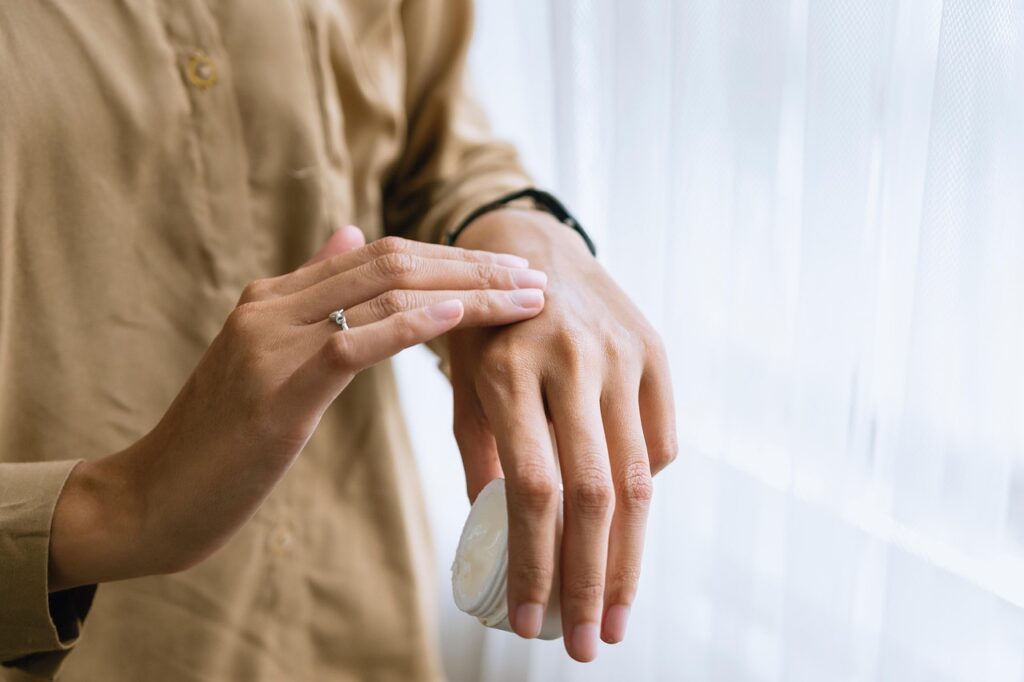
Topical CBD (if using): Apply to clean, dry affected skin twice daily. Avoid formulations with alcohol, fragrances, or preservatives that can aggravate eczema — read the ingredient list carefully. CBD concentration matters: look for products with at least 250mg CBD per 30ml to ensure meaningful local delivery.
Combination approach: Start oral CBD first and assess at 4 weeks. Add topical CBD for active flare-ups. This protocol mirrors how most dermatologists approach CBD integration — systemic control first, local treatment second.
For general CBD dosing guidance: CBD Dosage Guide. For how CBD interacts with the immune system: How Does CBD Work?
Frequently Asked Questions
Does CBD help with eczema?
The biological evidence says yes — CBD has documented anti-inflammatory, anti-itch, and skin barrier-supportive mechanisms directly relevant to eczema pathology. A 2019 Clinical Therapeutics study showed significant skin improvement with CBD ointment over 8 weeks. Early clinical evidence is positive, though large-scale RCTs are still needed. For a chronic condition with few safe long-term options, the risk-benefit profile of CBD is favorable.
Is topical or oral CBD better for eczema?
Both serve different roles. Oral CBD addresses systemic immune dysregulation — the root driver of eczema flares. Topical CBD provides direct local anti-inflammatory and anti-itch action at the skin surface. For most patients, oral CBD is the more impactful starting point; topical CBD is a useful complement for managing active flare-ups.
How long does CBD take to work for eczema?
Topical CBD can reduce itch and local inflammation within 30–60 minutes of application. Oral CBD’s systemic anti-inflammatory effects take 3–6 weeks of consistent daily use to accumulate — this is the timeline for most users to notice meaningful changes in flare frequency and severity. Track weekly rather than daily to see the trend clearly.
Can CBD replace steroid cream for eczema?
CBD should not replace prescription steroid treatment without medical guidance. A 2020 survey found 51% of eczema patients who used CBD reported reduced need for topical steroids — but this was a reduction, not elimination. CBD works best as a complement to existing treatment: potentially reducing the dose and frequency of steroids needed while providing an additional anti-inflammatory mechanism. Discuss any changes to your steroid protocol with your dermatologist.
Is CBD safe for sensitive skin and eczema?
Oral CBD is generally well-tolerated with no known skin-sensitising properties. For topical CBD, the carrier ingredients matter more than the CBD itself — many topical products contain alcohol, fragrances, or preservatives that are documented eczema triggers. Always patch test a new topical product on a small unaffected area for 24 hours before applying to active eczema.